


-
Sale!
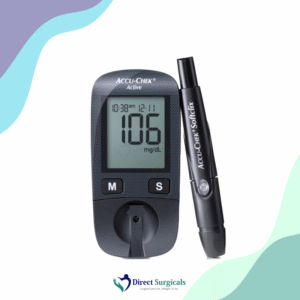
Glucometer
₹900.00Buy Now This product has multiple variants. The options may be chosen on the product page₹1,124.0020% off
FAQ
Target Levels: Normal blood sugar levels vary by individual and time of day. Generally, the target range for fasting blood sugar (before a meal) is 80–130 mg/dL, and the level two hours after a meal should be less than 140 mg/dL. Your doctor may set different targets, especially for the HbA1c test. Always consult your healthcare team for your personalized target range.
Test Strip Compatibility (Crucial): Blood glucose test strips are not universal. You must buy the strips that are specifically compatible with your brand and model of glucometer (e.g., Accu-Chek Instant strips for an Accu-Chek Instant meter). Check the name on your meter and the strip box to ensure they match. Using incompatible strips will result in inaccurate readings.
Hypoglycemia Management: Symptoms of low blood sugar (hypo) include feeling shaky, dizzy, confused, sweaty, or unusually hungry. If your reading is below $\mathbf{70 \text{ mg/dL}}$, follow the “15-15 Rule”: Eat or drink 15 grams of fast-acting carbohydrate (like 3-4 glucose tablets or half a cup of juice), wait 15 minutes, and re-test. If the level is still low, repeat the process
Diabetic Foot Care: Diabetic foot problems are a serious risk due to nerve damage (neuropathy) and poor circulation. Diabetic footwear and diabetic socks are designed to: (1) Reduce pressure points and friction, preventing ulcers. (2) Offer extra depth and width for better comfort. (3) Provide cushioning and support. Regular foot examination and wearing protective footwear is vital to prevent diabetic complications.
Troubleshooting: First, check the basics: (1) Ensure your test strips are not expired. (2) Check if your hands were clean and dry. (3) See if the meter requires a coding number and if it matches the strip box. If the reading is still unexpectedly high or low, or if the meter shows an error code, wash your hands and retest. If the discrepancy persists, call your doctor or the glucometer’s customer support.